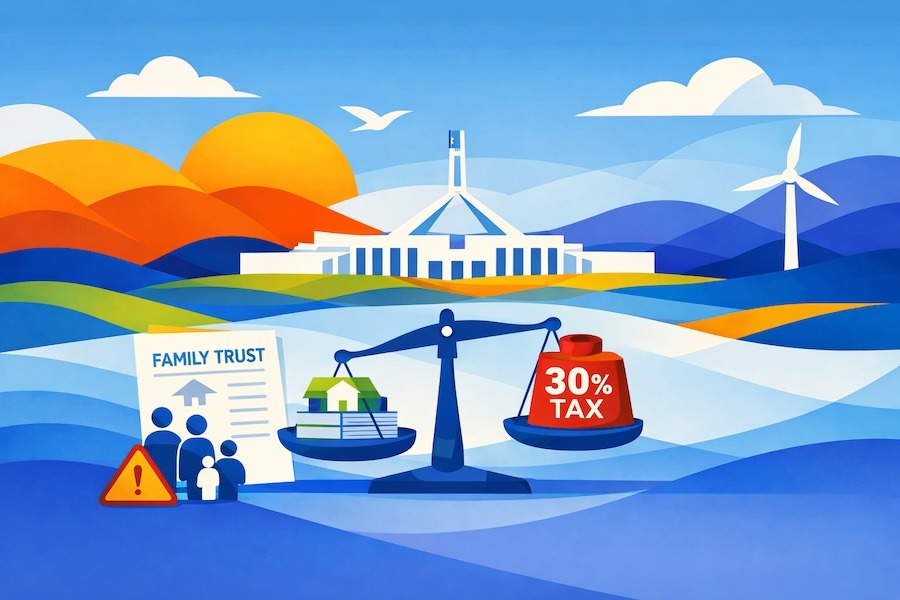
The Tax Ruling That Could Affect Every Family Trust in Australia

The High Court of Australia has recently handed down a major decision in the case of Commissioner of Taxation v Bendel. While this ruling is a victory for many taxpayers who use family trusts, it is important to look past the headlines and understand what it actually changes and what it doesn't.
Disclaimer: Tax law is complex. This article is a simplified overview intended for general information purposes only and is not financial or legal advice. Because trust deeds and financial histories vary from person to person, we strongly encourage you to have a tax professional or contact us to look at your specific setup.
The Big Win: UPEs Are Not Loans
For years, the Australian Taxation Office (ATO) maintained that an Unpaid Present Entitlement (UPE) — where a trust distributes income to a "bucket company" but doesn't pay the cash immediately — should be treated as a Division 7A loan.
Under Division 7A, if a company makes a "loan" to a shareholder, strict rules apply: you must have a written loan agreement, pay a minimum interest rate, and make annual principal repayments. If you don't, the distribution can be taxed as a dividend.
The High Court has now officially rejected the ATO’s position. They confirmed that a UPE is an "equitable right" (a legal claim to money), not a "loan." Because a UPE is not an advance of cash, it does not trigger the strict Division 7A requirements.
Why It’s Not a "Silver Bullet"
While this is a significant win, it does not mean trusts are now free from ATO scrutiny. There are three critical things to keep in mind:
- Other Integrity Rules Still Apply: Just because a UPE isn't a loan doesn't mean it’s ignored by the tax office. Two other key rules remain fully operational:
- Subdivision EA: This is about where the money actually ends up. For example, imagine a trust distributes income to a bucket company but never actually sends the cash there. Instead, the trust lends that same money to the company's shareholder—say, a family member who controls both the trust and the company. Subdivision EA says the tax office can treat that loan as a dividend paid out to that person, with the same tax consequences as if the company had paid them directly.
- Section 100A: Think of this as the "common sense" rule to stop tax avoidance. If the only reason you set up a distribution in a certain way was to shift money to someone who pays less tax (a "reimbursement agreement"), the tax office can cancel that benefit and tax you at a much higher rate.
- You Cannot Easily "Undo" History: If you have spent years managing your UPEs as Division 7A loans—signing loan agreements, paying interest, and making repayments—you cannot simply decide to "recast" those arrangements as UPEs today. The legal character of those transactions has already been established by your past conduct.
- Facts and Deeds Matter Most: While the High Court's ruling applies broadly, whether it helps you in practice still depends on your specific circumstances—particularly how your trust deed is worded, how your trustee resolutions are structured, and how the money has actually been handled over the years.
What Should You Do Now?
The ATO is currently reviewing its position and will likely issue updated guidance soon. In the meantime, the best approach is to be proactive:
- Audit your trust: Have a tax professional review your trust deed to see how your entitlements are classified.
- Track the cash: If the cash from your trust distributions is flowing to shareholders or associates, be aware that Subdivision EA remains a significant risk.
- Keep clear records: Document your trustee resolutions and the reasons for your distributions. Clear, contemporaneous records are your best defence.
The Bendel decision is a welcome correction, but it is not a "get out of jail free" card. As with all things in tax, the devil is in the details, and a conversation with us is the best way to ensure you are on the right side of the line.